310 E. University Dr Granger, IN 46530

Permanent Identification for Lifelong Protection
Losing a pet, even for a short time, can be one of the most stressful experiences a pet owner faces. Collars and ID tags can fall off, become damaged, or simply be removed, leaving no reliable way to identify a lost dog or cat if they are found by someone else. Pet microchipping offers a permanent form of identification that stays with your pet for life, giving you a far better chance of a happy reunion if they ever wander off or go missing.
At University Park Veterinary Hospital in Granger, IN, we offer quick, safe microchipping for dogs and cats, serving pet owners throughout Granger, South Bend, Mishawaka, Notre Dame, Elkhart, and Osceola in Indiana, as well as Niles, Buchanan, Edwardsburg, and Cassopolis in Michigan.
How Pet Microchipping Works
A microchip is a tiny device, about the size of a grain of rice, implanted just beneath your pet's skin, typically between the shoulder blades. The implantation process is quick, requires no anesthesia, and feels similar to a routine vaccination, which makes it easy to add on during a wellness visit for a puppy, kitten, or adult pet. Once implanted, the microchip remains in place for your pet's lifetime without needing batteries, maintenance, or replacement.
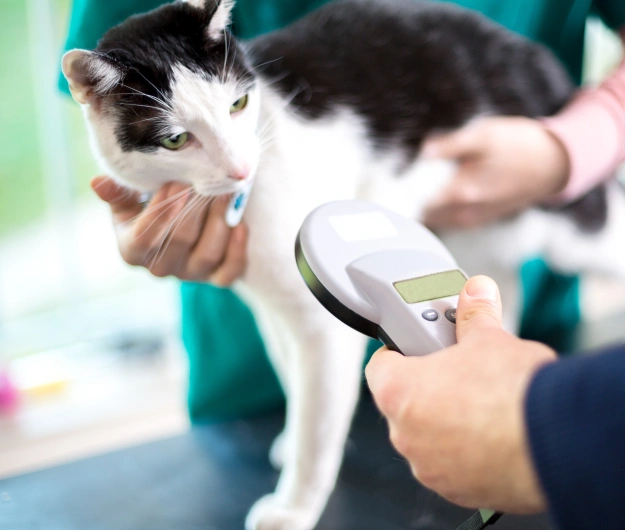
Each microchip carries a unique identification number that can be read using a handheld scanner. This number is linked to a pet recovery database along with your contact information, so if your pet is ever found and brought to a veterinary hospital, animal shelter, or animal control office, staff can scan the chip and reach out to reunite you with your lost pet.
Why Microchipping Is One of the Best Forms of Pet Identification
Collars and tags are a helpful first line of defense, but they are not foolproof.
- A frightened or startled pet can easily slip out of a collar
- Tags can become worn, damaged, or unreadable over time
- A microchip cannot fall off, be removed, or wear down
- Microchipped pets are significantly more likely to be reunited with their families compared to pets relying on a collar and tags alone
- Reunions remain possible even months or years after implantation, including cases where a pet travels far from home
Registering and Updating Your Pet's Microchip Information
A microchip is only as effective as the information linked to it. Once your pet is microchipped, it is essential to register the chip with the manufacturer's pet recovery database and keep your contact details current, especially after a move or a change in phone number.
An unregistered or outdated microchip can delay a reunion even if the chip itself is working properly. Our team can help you complete this registration at the time of implantation and explain how to update your information whenever your contact details change. We also recommend having the microchip scanned during routine wellness visits to confirm it is functioning correctly and has not shifted from its original position.
Who Should Consider Microchipping
Microchipping is recommended for every dog and cat, regardless of age, breed, or lifestyle.
- Indoor only pets can still slip out through an open door or window
- Outdoor pets face a higher risk of wandering beyond a familiar area
- Puppies and kittens can be safely microchipped at a young age, often during the same visit as their vaccination series
- Adult and senior pets who have never been chipped can have the procedure done at any routine appointment
A Simple Step for Long Term Peace of Mind
Pet microchipping is a quick, low cost way to add a meaningful layer of protection for your dog or cat. Whether you are microchipping a new puppy or kitten or adding this protection to an adult pet for the first time, our team at University Park Veterinary Hospital is happy to answer questions and get the process started during your next visit.