310 E. University Dr Granger, IN 46530
Getting to the Root of Your Pet's Health Concerns
Understanding what is really going on inside your pet's body often requires more than a physical exam alone. Diagnostic testing gives our team a clear, objective look at your pet's health, helping confirm a diagnosis, rule out other conditions, or catch a developing problem before it becomes serious.
At University Park Veterinary Hospital in Granger, IN, our in-house laboratory equipment allows us to run many diagnostic tests on site, often providing results the same day rather than waiting on an outside lab. We are glad to offer this care to pet owners throughout Granger, South Bend, Mishawaka, Notre Dame, Elkhart, and Osceola in Indiana, as well as Niles, Buchanan, Edwardsburg, and Cassopolis in Michigan.
In-House Laboratory Testing
Our digital in-house laboratory equipment gives us the ability to provide an instant, overall health profile for your pet. Having this technology on site means many results are available within minutes rather than days, allowing treatment to begin sooner when it matters most. Our in-house diagnostic capabilities include:
- Complete Blood Count (CBC): Evaluates red and white blood cell counts, blood volume, and clotting ability, helping identify issues such as anemia, infection, or inflammation.
- Chemistry profile: Screens for problems with liver and kidney function, blood sugar levels, protein levels, and electrolyte balance, often catching organ related issues before outward symptoms appear.
- Urinalysis: Evaluates kidney function, hydration status, and urinary tract health, and can help detect infection, crystals, or diabetes.
- Cytology: Examines cells collected from the skin, ears, or masses under a microscope, helping identify infection, inflammation, mites, or abnormal cell growth.
- Fecal testing: Searches for internal parasites such as roundworms, hookworms, whipworms, and coccidia, which can affect pets of any age but are especially common in puppies and kittens.
Heartworm Testing and Prevention
Heartworm disease is a serious, potentially fatal condition spread by mosquitoes and common throughout Indiana. Because clinical signs like coughing, fatigue, and rapid breathing often do not appear until the disease has progressed, testing plays a key role in catching infection early. A simple blood test performed in our office can detect heartworm in just a few minutes.
We recommend heartworm testing every two years for pets on year round prevention, and annually for pets who are not given prevention during the winter months.
Skin and Ear Diagnostics
Skin and ear issues are among the most common reasons pets are brought in for evaluation, and getting an accurate diagnosis usually requires more than a visual exam. Skin scrapings and ear cytology allow our team to look closely for mange mites, ear mites, yeast, or bacterial infection, guiding treatment toward the specific cause rather than a generalized approach.
Because skin and ear problems can look similar on the surface despite having very different underlying causes, this testing plays an important role in choosing the right treatment the first time.
Tonometry and Glaucoma Screening
Glaucoma is a painful eye condition caused by increased pressure within the eye, leading to irreversible blindness if left untreated. Using our Tonopen instrument, we can measure eye pressure in a matter of minutes through a quick, painless procedure called tonometry. This testing helps us determine whether your pet's eye pressures are normal or elevated, allowing treatment to begin promptly if glaucoma is suspected.
Diagnostic Imaging
Beyond bloodwork and lab testing, imaging plays a key role in seeing what is happening inside your pet's body. Our hospital offers both digital X-ray and ultrasound, giving our team a closer look at bones, organs, and soft tissue to help diagnose a wide range of conditions.
Digital X-Ray Imaging
Digital X-rays help diagnose issues affecting bones, joints, the heart, lungs, and spine, and are commonly used following trauma, suspected fractures, or when a pet has swallowed a foreign object. Our digital equipment produces high quality images in seconds, and results can be shared digitally with board certified specialists when further interpretation is needed.
Diagnostic Ultrasound
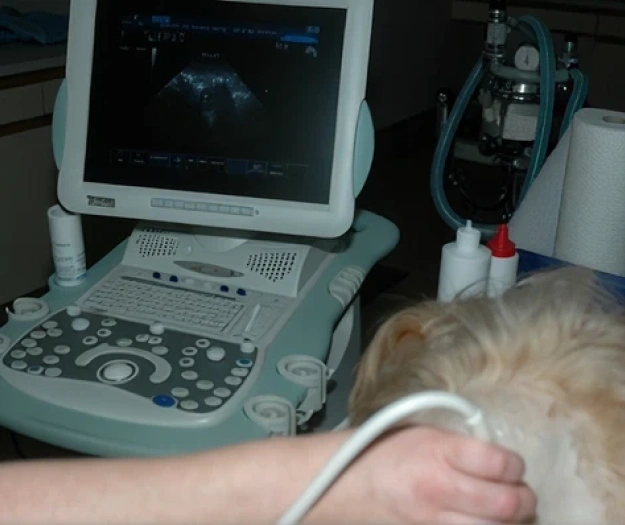
Ultrasound provides a non-invasive, in-depth view of internal organs such as the liver, kidneys, and bladder, without the need for sedation in most cases. It is often used alongside X-rays to evaluate organ size, detect fluid within the body, or identify masses that may not be visible through other diagnostic testing.
When Outside Laboratory Testing Is Needed
While our in-house laboratory covers many of the most common diagnostic needs, some testing requires more specialized equipment or expertise than can be performed on site, much like in human medicine. In these cases, we send samples to specialized laboratories around the country, which may be necessary for advanced bloodwork, biopsy analysis, or less common infectious disease testing. Our team manages this process for you and follows up as soon as results are available.
Diagnostics as Part of Ongoing Care
Diagnostic testing plays a role well beyond diagnosing illness. Bloodwork and urinalysis are also valuable tools during routine wellness visits, particularly for senior pets, and are a standard part of pre-anesthetic screening before surgery to confirm a pet's organs can safely process anesthesia. By using diagnostics proactively rather than only when a pet is already sick, our team is often able to catch developing issues at a stage when they are easier to manage.